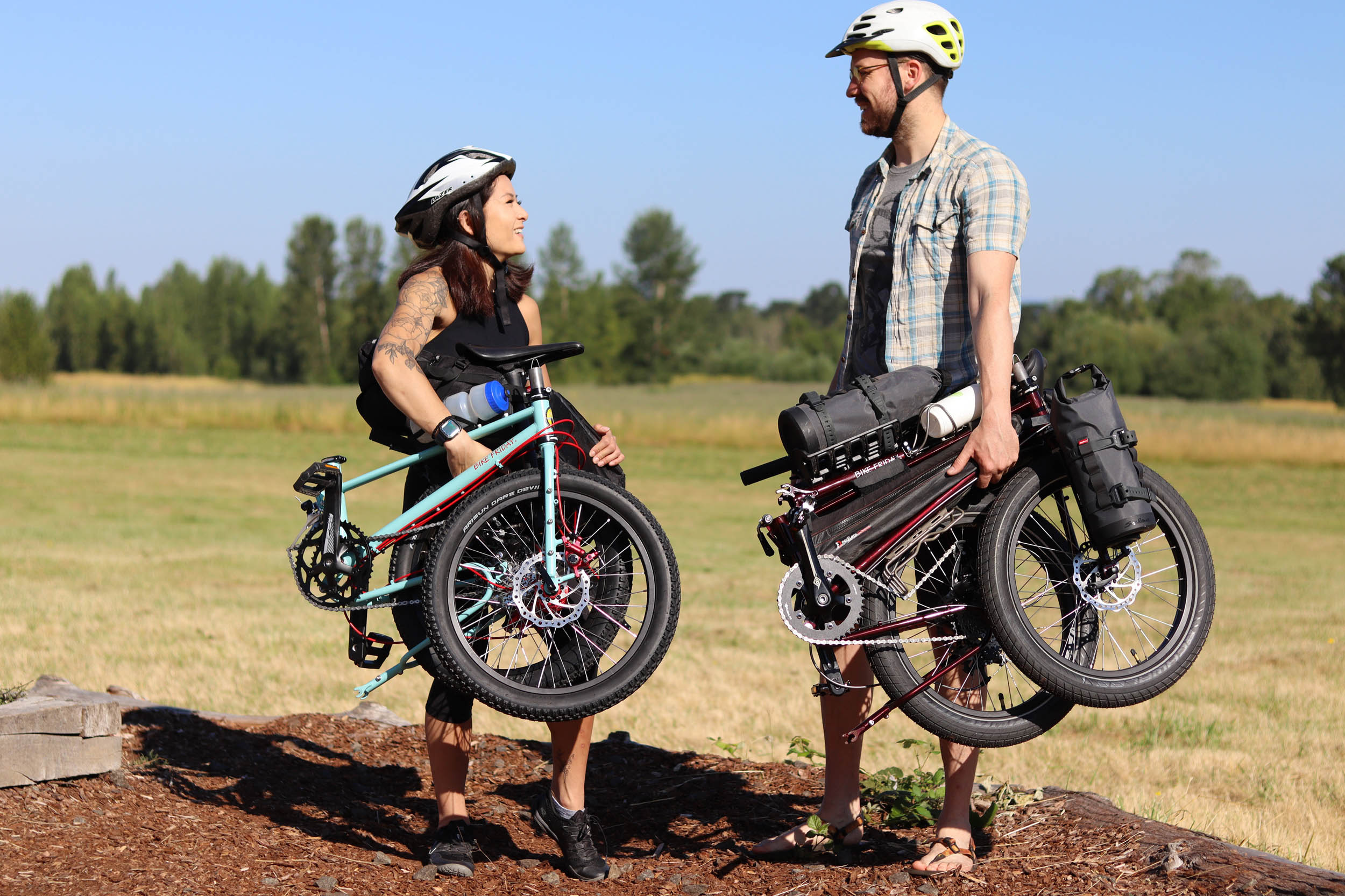
I own what could possibly be the coolest folding bike ever made: the Bike Friday Tikit Hyperfold. It has a folding mechanism with an extremely high nerd quotient. It has a reputation as the fastest bike to fold and unfold, requiring no latches, safeties, or adjustment at all. But more importantly, unlike many other exotic folders (ahem Brompton) it largely uses standard parts. You can fit it with whatever drivetrain, brake system, handlebars, pedals, and seat you want. Though it has the same 349 wheel size as a Brompton, it rides much, much better. It was designed by in conjunction with Bike Friday by Rob English, a mechanical engineer who long was (maybe is?) the British speed record holder.
But Bike Friday no longer manufactures it: the frame design is so exotic and weird that they had a number of frame issues and failures they had to overcome in the field, and Bike Friday has a lifetime frame warranty. It was a very popular bike, but by the time they had worked out all the kinks the value of them continuing to sell the bike had probably gone negative. The Tikit was just too bleeding edge for its time.
The Tikit relies on a special part in order to be ridden: its hyperfold cable. This cable is no longer being manufactured for Bike Friday and cannot be obtained anywhere. When my cable gives out, and it'll happen sometime soon, my Tikit will probably wind up on the display wall of a bike store. And I'll be searching for something to replace it. But there is no folder even close to the Tikit in sheer engineering prowess, which depresses me to no end as a tech guy. Bike Friday itself replaced the model with the Pakit, a decidedly inferior bike. I'm not sure what to do.
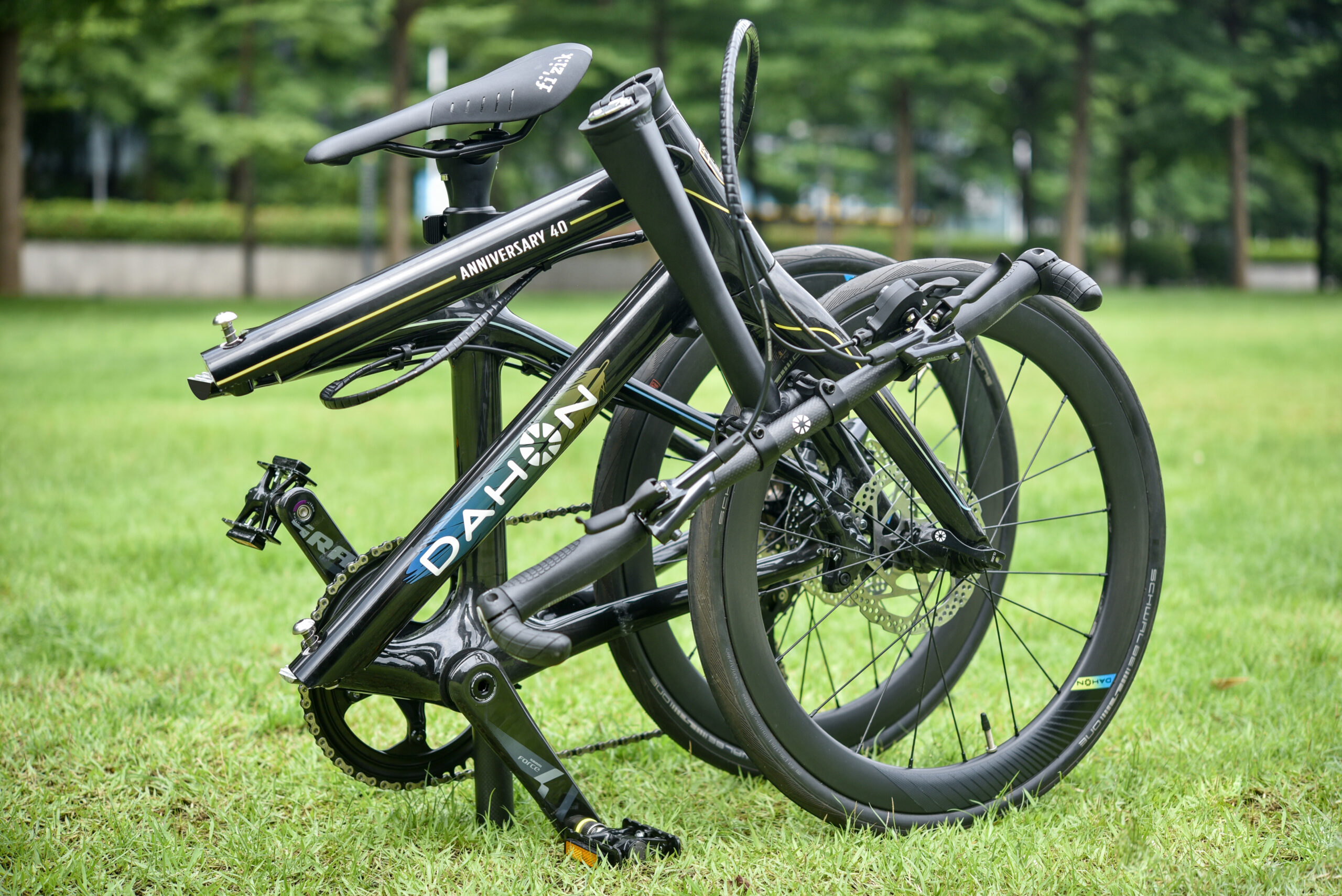
Praised by whom? The btwin folder is a low-rent and low quality version of a Dahon-style Chinese fold-in-half folder. That folding design is about 95% of the folding market, and has no clever design features whatsoever. It is simple to manufacture, has no patents, and is pretty bad in general riding use. It is neither fast to fold nor compact, and is very bad in customization, particularly with regard to the rider's reach. And it is really, really boring. Dahon and Tern have some okay bikes of this design, but the entire rest of the design category is dominated by bikes of quite poor quality, including the btwin.
The Decahlon folder folds faster than a Brompton. A friends of mine has both and he's trying to convince me on buying the cheap decathlon bike over a Brompton. The demonstration was convincing.
I'm a big fan of the fact that you can push a Brompton while folded. A feature that other folders miss.
You can push folders that lack the Brompton's rack-rollers design with a little practice. If you watch the Bike Friday video you'll see the guy do it, though it looks like that bike's folding seat post makes it a bit more difficult than on a cheaper folder. I push my folded Zizzo around no problemo.
Praised by most customers, probably. As an engineer I appreciate Bike Friday's attention to detail and I own a good few "artisan" devices myself, but the reality is that most people want a mass-produced bike that is "good enough" within their budget.
There's no doubt that your bike is higher quality than the Decathlon one, but the average customer doesn't appreciate how well engineered it is or how many patents (??) are involved.
Having lived in Italy and used the btwin folder quite a lot, I can assure you there are lots of basic folders in its category and price range which are much better. I'd look into Dahon and Tern for a basic folding bike.
Folding bikes are complex and hard to make safely, and the folding mechanism is costly to engineer right. This means that the manufacturer of a cheap bike is either providing you with a dangerous folding mechanism, or is putting a lot of the cost of the bike into the folding mechanism, so there's not much money left for the rest of the parts. Either way, it means that cheap folding bikes are a bad choice, and the btwin folder is a good example of that.
Some data points: I bought a Decathlon folding bike (Fold 500; new, ~450€) a few months ago. Using it many times a week (probably more than it's intended).
N=2, but my Decathlon bikes have well over 50000 km between them with no issues, beyond the usual wear and tear. Value wise, they are fantastic. They are road bikes, however, not the folding specifically.
This is what a lot of people want to be true, but in fact is not. I believe it can be mostly explained by the "IKEA effect": any given model is bought by so many people that the inevitable design defects are quickly found and remedied.
It folds the rear wheel “triangle” (red in the picture) underneath to make it shorter to fit in a car trunk, and quick-releases the seat IIRC. Also has squishy rubber-lump suspension because the rear wheel pivots.
(ICE being Inspired Cycle Engineering in this context).
I've had a regular Tikit (there's a single knob to lock the steer tube in place, adds 10 seconds to the fold/unfold time) for over 15 years. Picked Bike Friday because I wanted a foldable to be able to take it onto public transit, and the Bromptons were pricier than I wanted. I did have a frame failure early on (repaired thanks to that lifetime warranty), but it's been reliable ever since. If your hyperfold cable does break, I hope at the least you'll be able to retrofit the regular locking knob onto it.
Hi fellow tikit owner! When they did the early upgrade of the cable, I thought it was just some gauge of airplane wire, threaded through the front nut and clamped or welded in place (I don't rude mine very often, it's a very early model and has a lot of the weaknesses like chain offs, and it comes unfolded too easily when I roll it). But I haven't been able to bring myself to sell it, it's still such a nice little device.
I still think the strida folding bikes are the ones with the highest nerd quotient. Never ridden one myself, but been tempted a couple of times. In particular the low weight compared to any other folding bike is appealing. Unfortunately they are difficult to find for test rides and they look quirky enough that I'd want to do a test ride before buying
The strida is certainly the *dorkiest*, not nerdiest, looking design, but in terms of engineering, it's very bad. It is terrible, TERRIBLE to ride, with horrible mechanical trail. It is extremely unstable. It has no gearing options at all and has essentially no standard parts. It is very clearly the outcome of a designer rather than an engineer ("Let's start with the idea of a bike that folds like a ladder").
It's definitely weird to ride -- I would ride it on a commute of more than a few miles. It's less stable than a real bike, but not completely unstable. e.g. I can fall of curbs but can't jump up them.
Most body parts are specialty, not the brakes system, I believe.
It meets its design goals very well:
- Internal brake cables and quick release mean it folds very fast and doesn't get tangled up.
- It can be rolled around when folded so you don't have to lug it.
- It stands tall and thin so only takes the space of a small standing passenger on transit.
That's not what stability is. A stable bike is one in which the steering is stable and easily controlled at various speeds. It's a function of steering geometry and mechanical trail. And the Strida is among the very most unstable folders on the market.
Answer honestly. Would you ride the Strida downhill at a 30 degree incline with a serious curve at the bottom without using the brakes, like you would a mountain bike? How about at over 15 miles an hour [like a racing bike]? A good folder should be able to do both easily.
I ride mine 2 miles a day, sometimes 3 based on a variable commute. Mine doesn't have gears or a spedometer so I can only say I am comfortable at the fastest speed I can pedal -- but it would feel unstable to go much faster, say, on a very steep hill.
I'm not trying to imply it feels like a weirdly shaped mountain bike. I'm saying it does its particular job very well. The seating position and narrow handlebars definitely preclude it doing anything other than getting you from the train station to work on urban streets.
I have a real bicycle, too for, well, actually riding a bicycle.
When I was at nerd school in the 80s. This was a super-popular intracampus (and occasionally extracampus) transportation option. I never managed to learn myself.
I ride a Reise & Mueller Birdy Mk3 mostly because I think folding bikes are neat and the Birdy has my favorite fold. The other rationale was that I wanted a nice bike I'd never have to lock up outside in NYC. The intention was to use it as a commuter since not spending on the subway would pay for it pretty quickly but shortly after I got it I started working remote so I've only done commutes on it for a couple weeks of gig jobs and it's mostly a recreational bike.
I went through an extended project to make it faster and wound up with a loop handlebar for body position, replaced the wheelset to move from 355 to 406 for tire selection and did the drivetrain at the same time to accommodate a 9-32 cassette. Between the wheels and the sub-11 tooth sprockets I can pedal up to ~26mph instead of ~20mph on the stock setup (good enough) and the low end is about the same. It doesn't perform like a race bike but it's pretty close to an endurance road bike. I do 20 mile rides a couple times a week on it and I've done a couple centuries.
The Birdy is my main bike but I'm a folding and recumbent enthusiast in general. The addition of the fold or moving the cranks in front of the rider means the obvious solution diamond frame doesn't work and I like seeing the creativity of the solutions. I've also owned a Xootr Swift that I gave away to my nephews, a Bike Friday Sat-R-Day folding recumbent for riding slowly in the parks, and a Baron Optima lowracer recumbent that I prefer for rides over 90 minutes.
It's a shame that it never went into production, but I guess at that time Optima already saw the writing on the wall that two-wheel recumbents wouldn't be profitable for much longer.
I'm particularly delighted that the fold is unique; I've never seen anything similar. Thanks for sharing; this is the sort of thing I look for on the Internet.
The article touched on it, and I agree, the biggest benefits for me are the portability and storability.
I can easily fit my folding bike into my car trunk, and very easily fit another one in the back seat. This enables you to drive to the start of a distant cycling route without having to deal with bike racks behind or on top of your car. So much less friction to you just going somewhere and cycling around.
And the small size means I can skip the common bike storage in my complex and store it in my apartment and it doesn't take up as much space as a full-sized bike. In my city, like most major cities, bike thievery is rampant. And if they can't steal your bike, they strip it of parts.
There are some drawbacks though. You can't really use them for hauling heavy loads, so forget bicycle touring or pulling a little trailer for kids or other things. They are also quite slow. And maybe some models have lots of gears, but the ones I checked out (in my admittedly limited search) did not, so they are not suited for very hilly routes.
I got mine used for $200 off FB Marketplace, it was in great condition and ready to ride. It is some generic brand that was sold in Walmarts a few years ago and I could not find any other information on it. I don't really care though. It got me out and cycling again!
Load meaning bags and rucksacks weighing down on the tyres, not trailers being pulled.
That’s another reason I like the G-line and am suspicious of the “just buy a cheaper folding bike from Ali express with a Brompton style tri-fold”. Idk how much I would trust a bike to take a 100kg person if it didn’t explicitly say a carrying capacity.
I love my Brompton, have taken it for short tours, and use it for a weekly grocery run (big front bag and a back pack). You can carry quite a lot, actually, though probably not a Costco run for a family of four. (That's what my cargo bike is for.)
The Brompton bike is also quite bombproof. It's heavier than other options, but solid as hell.
I use my Brompton in ways which are not on its label.
Besides rides in the city, I take it on long 100+km rides on the road, on gravel, forests, rocks, mountains.
It has taken me on every street of Barcelona and around it many times over. I've had it for 14 years.
Because of the small wheels it's extremely agile and allows you to go really slow without losing balance. This makes it like a sharp knife in the city but also off road on rocky trails, steep climbs, eg. in places where you'd never think of going with a Brompton.
If the trail is impossible, I can just lift it up and climb with it on my shoulder. Or I can fold it and carry it like a bag, on the metro, trains or in the trunk of the car.
As I understand, I'm not the only one using the Brompton as a gravel/mountain bike, so they released the G-line, which I still haven't checked out, but it's on my bucket list.
If I were to write one eulogoy for a piece of equipment in my life, the Brompton is definitely it :).
I don't fault OP for this, but it's pretty frustrating to me as someone who's quite attached to his non-folding bike that the main benefit of folding bikes is that, unlike regular bikes, they aren't banned from pretty much all public transport
Full size bikes on public transport doesn’t work well when crowded though. I briefly took a bikee recumbent (really small) on BART and it was great for me but pretty annoying for others for 1 stop (sorry if you went between Ashby and Oakland in 2011!)
Even in the Netherlands you need to pay €8.50 to bring your bike on, perhaps so the trains aren’t overrun.
I think that is a very valid criticism. Equally, in the UK there is a sense of providers having tried nothing and then given up concluding that it hasn't worked. Some services that ban bikes legitimately cannot accommodate them safely, some can. Some services legitimately are too busy at peak times to accommodate bikes, and some ban them anyway because making granular policy is hard. In a similar vein, some of those same services that ban bikes due to how busy they are running eight of a possible 10 carriages because they claim not to need the space.
I think a lot of the rules turn out to be reasonable but the rulemakers should be less gung-ho about restricting bikes when they don't really need to
Yeah, among other things I thought it was odd I've only seen bike racks on buses in the US, but not in Europe (having looked for them in Ireland, the UK, and the Netherlands)
Thankfully uncommon in North America. Growing up in Los Angeles where every bus has racks and every train car has bike spots, I was shocked the first time I visited SF and found I couldn't bring it on Muni trains.
I know DC bans them and Boston/NYC/Toronto have limited hours, but every other city with a metro seems to welcome them.
Chicago started allowing them on the “L” about a decade or so ago, although with limitations during rush hour. But the fact that boarding the “L” usually requires stairs at both ends of the trip makes it less appealing.
Likewise, Metra, the Chicago equivalent of LA’s Metrolink started allowing bikes on its trains at about the same time, but the train cars used are hostile to bikes because you have to climb stairs inside the train and then you end up in a narrow vestibule with sliding doors on each side. The Metrolink cars. meanwhile, have the first level at the same height as the boarding platforms and a nice open area where bikes fit. LA has highly benefited from speccing its transport infrastructure late in the game.
DC does not ban normal bikes. I see them all the time on the metro. I'd say it is becoming less common as they build out more bike parking infrastructure at stations, but it is definitely something people still do.
I do find my brompton a lot more convenient for the train, though.
I remember one time on the bus a commuter had his full sized bike in the bus. This was a full sized with plenty of space bus, so it wasn't really in the way at all. The bike rack was full and it was a summer day. So probably the guy figured he may as well just try bringing it on instead of waiting another hour for a bus and hoping there's space.
Anyway one busybody got all uppity. But the driver and rest of the passengers didn't care. So it was fine.
Yeah, this definitely wouldn't fly in any country where a lot of people bike and use transit. Tokyo metro would be hell if full sized bikes would be allowed.
Many US buses have a bike rack on the front that can hold 2 or 3 bikes which allows for easy bike-bus travel. I don’t think bringing the bike inside the bus is an option anywhere.
The bike is for biking. Of course it is annoying when people bring it on the bus. Or park it in front of my door.
The bike on the metro is not rare because it is annoying. People do simply not have that much tact. It is more rare because people bike those distances and you pay extra on the metro. It is free on the S-Train which also covers longer distances - hence more bikes.
I find bikes annoying in general as well. But that is because they are usually attached to a human.
The point was that it can actually work.
It is not all of nothing. It is an integrated system which actually works.
This was a reply to a comment which claimed that bikes could not work in a large city with a lot of bikes and public transportation.
The same people often argue that bikes cannot work in cold weather.
Granted I live in a smaller town, but I see a lot of bikes on the bus. Given that we don't have a super dense transit system, bike + bus is a practical way for a lot of people to make buses work. The bike solves the "last mile problem."
Both of my kids have jobs that let out after the last buses run at night, so they take the bus to work and ride their bikes home.
I understand the frustration but also bikes take up a lot of space. When someone brings one on the NYC subway at rush hour it’s definitely an inconvenience.
I feel like the failure here is that it gets so packed that there isn't space for a bike. Because it's not just bikes impacted here. If you can't fit a bike, you can't fit a wheelchair, you can't fit a pram, you don't have space for someone who needs to sit down, or someone who can't handle being pressed in at all sides by other passengers.
It's a wrong allocation of resources where we decide everyone can have 4 empty seats to drive to work but we can't fit 1 person and a bike on PT.
Pretty much any decent mass transit system in the world is packed at rush hour. The whole advantage over private vehicles comes from the fact that people take up less space.
I agree it's a fairly common issue but I feel like it's not an impossible issue to solve. A person and a bike is still massively smaller than a person in an SUV. The system is basically designed with just enough capacity to barely work. But I feel like if we really wanted PT to be the obvious best choice it should be provisioned a bit over the least possible capacity.
I mean sure it's not impossible if you are willing to spend hundreds of billions of dollars to tunnel additional subway lines all over the place.
When they were built, these subway systems obviously were provisioned over expected capacity. But obviously, cities grow and nobody has a crystal ball to know what the population of a city will be 50 years from now.
The thing about subways is that adding significantly more capacity on an existing line isn't really possible if you are already running the trains as close as possible together as safety allows, which is often the case at rush hour. It's not like buses where you can just add more to the schedule.
The thing is, everyone can't have 4 empty seats to drive to work in New York City. There's only so much space on the streets and in the bridges and tunnels, and now there's a congestion charge on top of that.
In Berlin you just have some areas in wagons designated as bike areas. They are still cramped but you can be there with your bike. Plus you pay extra for your ticket to bring the bike.
I know it's not for everyone, but it is also a reasonable touring bike if done within its constraints. I've probably done closer to 40 days on my 16" Brompton, longest was a two-week 1000km ride. On the topic of leaving the bike out-of-sight: In those 40 days I've left it locked a total of 20 minutes, otherwise it comes with me into restaurants, supermarkets, public restrooms, hotel rooms..
The biggest downsides are speed and climbing ability. 80k or so has been a reasonable max distance on tour (I've done one 100k day, it was long) and I wouldn't take it to the Alps.
Like the OP, I run Schwalbe Marathon Plus which has been good. But I have had one catastrophic puncture after riding over a particularly nasty piece of glass that cut straight through the tire. After that I bring a folding backup tire.
For general use, they are in theory thief-proof because you can take them everywhere with you. The downside is they're expensive so you HAVE to take them everywhere with you. Leave them out and they'll get stolen. For that reason I think the happiest I've been is with a dirt cheap bike in Japan. Didn't even lock it properly (just a key built into the frame) and could park it outside any old shop or restaurant for hours. Super convenient.
For me, just having a $7,000 bike parked on the street would be too stressful even if it didn't get stolen. I've had bikes stolen in Australia and there is basically nothing you can do about it. The thieves have hoodies, masks, and battery powered grinders that will cut any lock.
The only defense is storing your bike inside. And then you get karens on the owners corp whinging that you aren't allowed to take bikes inside. Who also don't give two shits when your bike gets stolen from the basement bike storage.
Not any more. A new generation of locks have an abrasive-filled plastic layer that aggressively wears down angle grinder discs. They aren't completely immune to angle grinders, but the better locks will take 20 minutes and multiple cutting discs to defeat.
I felt this way until I bought full coverage bike insurance.
For my $250 deductible I basically just get a nice upgrade to the latest version / a brand new ebike for ~$200 / year.
The peace of mind alone with insurance (and a really nice lock) have fully mitigated this for me. I've been leaving my ~$2k ebike locked up all over San Francisco for ~3 years without it being stolen. (My first beater bike was a POS locked up in my apartments secure bike storage and it was stolen after I owned it for ~9 days so I figured I couldn't double down on the bad luck).
> For that reason I think the happiest I've been is with a dirt cheap bike in Japan. Didn't even lock it properly (just a key built into the frame) and could park it outside any old shop or restaurant for hours.
I didn't see a single bike locked up when I visited Japan. I was told that this is because of the high conviction rate and mandatory bike registration process that they have. Was I just in especially low-crime areas? Do most Japanese cyclists lock theirs up?
If the bikes had baskets they were very cheap and not worth stealing. Obliviously theft is lower in general in Japan and the police will pursue it. Police have been known to arrest someone ordering a small coffee cup and using it to fill a medium coffee, or stealing satsumas from an unmanned vegetable stall.
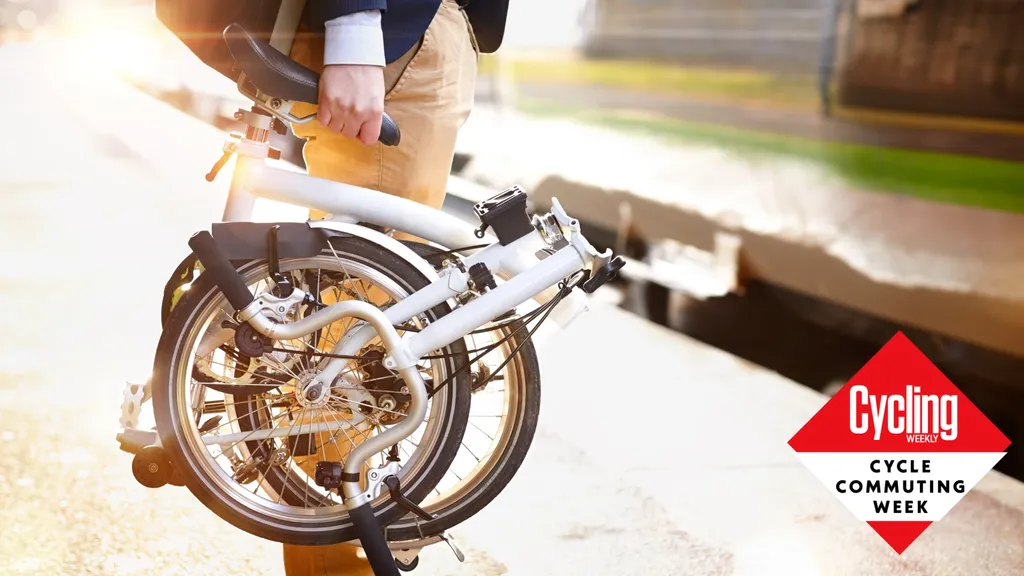
Piling on with the Brompton love here. Apartment friendly. Car trunk friendly. Motorcycle sidecar friendly. Their hardcase makes it airplane friendly. Theft-resistant, since it's carried and stored next to you more often than most bikes.
The Brompton luggage system (its mount and low, forward position) is amazing. Bags can be massive and carry a lot of weight and the bike still feels great to ride.
For pedals, I use MKS EZY Superior Lambda pedals with street shoes. Long but not wide metal platform. And they're quick release. The stock Brompton pedals are clever, but not awesome for long distance or hammering. I've spun SPD clipless pedals on for spirited riding and those are, of course, a joy.
The Brompton design is genius but if I could improve one thing, it would be to allow slightly wider tires into the frame.
I'm 15 years into owning a Brompton and I know I'll never get rid of it. and I'm still finding useful and/or hilarious new places to take that might otherwise not allow for a bike. e.g. I had to ride a cargo bike across town for service last week and taking the Brommy in the box so I could ride something home was just so nice
I have two Bromptons (a 3 and a 6 speed). Unfortunately, I've also had TWO stolen .. painful. This was years ago now and both were locked up in central London. The second time, locked via a "Kryptonite New York Fahgettaboudit", a good U-lock. An angle-grinder gets through these easily and they're battery powered. I don't believe ANY bike lock is safe now and never lock the Brompton up outside. Great bikes!
Ouch. I also live in a city where bike thefts are … fuck, just part of life. Which is a horrible norm to have to accept.
You’re right that a grinder-proof lock does not exist. Having read reviews and listening to bike shop owner experiences (they hear everything) … I have Kryptonites, motorcycle chains, Abus folding locks, but my personal favourite that I’m “trusting” (ha, delusions) is the Hiplok DX1000. Check it out. As good or better grinder results than nearly all others, it seems. But nothing is grind/pry/jack-proof.
Yes. Now if you live in a metro centre and are considering a Brompton purchase, this may be less of an issue if you have a handful of dealers … in-stock common parts availability is a good pre-purchase question to ask. It’s a big ticket item.
I cracked the housing on my proprietary Brompton shifter (made it nearly non functional) and the part was actually available in local stock … but I chose to JB Weld epoxy the crack instead and it’s probably stronger than stock now.
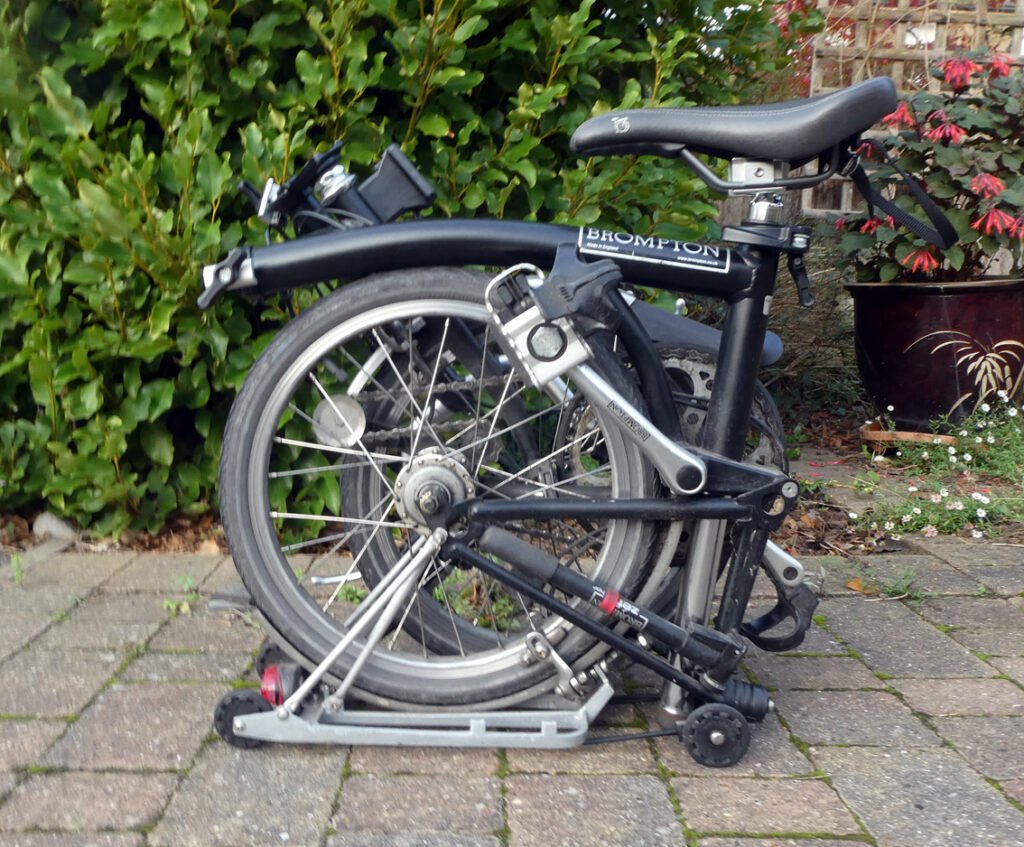
- folds in 3 pieces (tri-fold) instead of folding in half (bi-fold). It was innovative at the time, is more common now. That makes it fold smaller than bi-fold bikes.
- keeps the oily chain and chainrings in between the wheels. Some other bikes which only fold in half have the oily bits on the outside[1], and/or the chainring sticking quite far out[2]
- When folded, the mucky main wheels are lifted off the ground by the little roller wheels[3].
- Brompton folds into almost a square which can stand up on its own, or pack reasonably neatly into a box, bag, or trunk. Other bikes can be more pointy, less convenient shapes when folded. e.g. [1] the bar grips stick out, the pedal sticks out the other side, the front chain ring sticks out.
- Brompton is useful partially-folded. With just the rear wheel tucked under it will stand up on its own. With just the seat or just the handlebars unfolded it can be wheeled around on the little roller wheels like a suitcase. It can be folded while leaving the front bag on without the bag going upside down, and with the bag accessible to wheel around using it like a shopping trolley.
- When folded, the top-tube of the bike is along the top of the fold, so is the seat, giving decent balanced places to lift and carry it like a suitcase.[4]
- One side has a folding pedal to tuck it away. The other side doesn't. I just think it's neat.
- Maybe goes without saying, but it can be folded without tools instead of being disassembled. Full size bikes can have joints in the frame so they come apart for packing for travel, but you just get a pile of separate pieces. Some medium size folding bikes need a wheel removed and only really fold for packing into a car, rather than something you'd do on the fly for a train trip. "Folding bikes" is not unique to Brompton, but in the market of "all bikes which can be made smaller", folding was a thing Brompton made mainstream, partly by inventing a fold that was so convenient.
When I was looking I found many full-sized folding bikes but they are solving a problem for an overlapping but different niche. They make it possible to fold and load it into a vehicle or make it more compact for storing at home, but they aren't very good at multi-modal commuting nor are they particularly compact. I remember someone with a folding Tern that struggled to carry it onto the train - it really isn't well suited for that.
This one in particular seems quite bad for it. Removing the tire and the folding mechanism designed to make it stable and stationary doesn't bode well for that use case. It really does seem to be designed only to be folded once you're done riding for the day and not intended for transporting it folded except for loading it into a trunk.
They are definitely prioritizing the ride quality over the foldability, compactness, or transportability. Bromptons try to balance it, which for me is a much better package, but for others, probably making too many compromises to ensure that it can meet those requirements.
Even if you ride it a full 2 hours every day, storage still accounts for more than 90% of what you do with your bike.
Where do I keep it is the problem Brompton’s solve really really really well. And incidentally, if you don’t ride a Brompton, the tires don’t get flat spots because when folded the tires don’t touch the ground.
I had a Brompton in Boston. It makes absolutely everyone happy. It's been a conversation starter with everyone from 15 year old kids dressed to give a don't start anything vibe to 75 year old retirees.
As TFA notes, they're allowed on trains even during rush hour when full-size bikes are not. They fold effortlessly; folding and unfolding a couple times a day at the station is no hassle at all. They ride much like a full size bike, with the exception of the fact that if you pedal through a turn, you're much more likely to strike a pedal into the ground.
The only downside is that the 16" tires are murder on bumpy roads, of which Boston has many.
The 16" tires killed all the joy I normally get from riding a bike tbh. I tried better seats, shock absorber posts, different gear ratios, everything. Just sucked the joy out of the ride for me. Hiding "throw away" bikes around the city and far off bus stops etc ended up being my solution and it worked better for me at least.
I've always wondered about that. It sacrifices much for portability. Seems great for a certain kind of commute or short trips, but I'm not sure I'd want to tackle seattle hills on it. That said, I've certainly seen a few around.
You can get them with gears to handle the hills. They also make an electric one too. I chatted up someone putting an electric one in their trunk and they love theirs. More gears, more dollars, and the electric adds considerably to the price too.
For my money, the sweet spot for a Brompton is 1-5 mile rides as part of a commute. Upthread there's links to people who tour on them, which is cool. I've done a 7000 mile bike tour, and I'm not sure I'd trade a touring bike for a folder for that kind of use. If I only had a Brompton, I'd try it, but I own, uh, three (3) other bikes.
Besides the ride comfort from the small wheels, it really does ride a lot like a regular bike. The ride comfort is a huge compromise, to be sure, but if you can ride a bike, getting on a Brompton takes basically zero adjustment. The steering isn't at all twitchy, and while they note that standing to pedal might feel weird, in my experience, it isn't.
Yeah i've been taking a lot more road trips up the family cabin and my bigger foldable electric bike generally means a serious bike rack (it can kinda wedge it in the back seat but.. it's a rad expand 5 I picked up around covid, first bike in 20 years). Considering the brompton g series or the bike friday 'all packa' for some forest service road/bikeable trail riding. I like a fatter tire even in the city. Much easier to stick in the trunk.
Admittedly, I’ve never ridden a 16” wheeled bike. My 20” is rough enough that I’ve never bothered considering the smaller wheeled models. Maybe if I bike/train commuted every day rather than a few times a month.
My other option was leaving my all-weather beater bike down at the station near work. I ended up not doing that just because I didn't want to have to haul it back and forth a couple times a year for maintenance. But yeah, valid solution for sure.
I went with the simplest possible design for mine: fixed gear, v breaks sealed bearing wheels. Was basically zero maintenance as I only ever used the brakes for emergencies and used foot power for planned stopping etc. had gater tires, worked fine in the snow in Boston round all year.
I think of my Brompton as an unbelievably well made tool. It fits so well into London with public transport and the general consciousness of the U.K. traveller. You’re not going to get a squiff glance from a train conductor or cab driver if you lug one onboard. The ride is more comfortable than a racing bike. Compartments fit, gyms have storage for them and it’s also a beautifully constructed item. It just solves a part of the transport problem so well.
Have a foldable bike as well, but in Japan, generally you have to put the folded bike in a bag as well. So it’s always just a little bit of extra friction.
Then again, taking the front wheel of my road bike takes an extra minute. Then i can put it on the train as well. That’s when I start questioning my decisions no matter whether I took the foldable one or non foldable one.
I'll add my anecdote here: I bought a Tern Verge and the accessory bike bag about 1.5 years ago because I imagined taking the bike on the train or public transport and because I lived in a small apartment. With the bag, you can take it like any other bag, but without, even if folded, you need to pay extra and place it in dedicated bike spots.
Now partially that's just my laziness and trajectory in life, but I haven't used the bag once (I'm not even sure how to use the bag, it's...complicated?). And the bike was folded only once, when I moved.
About a year later I bought a road bike because I wanted better climbing and longer distances and more comfort. Ultimately, for me the folding bike - while great fun in general, it's fast and agile - was kind of the wrong choice.
Yeah fair. My folding bike is actually an e-bike, and unfortunately not as light as my road bike. In larger stations of Japan it gets very annoying to carry it around in a bag.
I really wanted an e-scooter to help my shorter routes here in Germany, but the legislation is quite unfriendly to it now. I need insurance and can't carry it in public transport. Maybe a folding bike would be great.
There are also E-Bike Folding bikes, though the mentioned Brompton is very expensive when buying with a motor. A Carbon Folding Bike with motor under 15kg is really worth considering
Depending where in Germany you are (Berlin for examnon-foldable ple) you can carry a regular bike in public transport (ubahn, sbahn, not bus). It is very common.
Technically yes, but the batteries on bikes are better protected, higher up, and usually of better quality than cheap scooter batteries, that are low to the ground. It's more of a statistical decision.
Boomers legislating away a method of transportation they have no use for, combined with a few people using it with little regard or civility, and rental operators so focused on competition that they're unwilling to enforce the rules.
But really, mostly it's the first of the three factors. Thank god they're avid adoptors of ebikes, making those safe for now.
In several countries in the eu (if not all) they restricted ebikes to 25kmh.
Car driverss going at 30kph get really pissed off.
I'd love an ebike for work travel but dislike playing tag with 1-tonne machines. At least on my road bike I can ride at a casual pace, with occasional mad accelerations.
Start: "I paid over two thousand dollars for this, used! Why are they so expensive? Other folding bikes are half the price and offer more, the gear shift is confusing and doesn't work properly, all the parts are overcomplicated and proprietary, >:-("
End: "I really like this bike. I'm so impressed with the build quality."
Comment a year later: "I've owned my Brompton for well over a year now, and absolutely love it. It's one bike I will absolutely never sell. The gear shifting was indeed a point of confusion for me, as there were two variables. 1. I had zero experience with Sturmey Archer hubs 2. The cable needed tightening. .. I'll often choose to bring my Brompton places not because it's portable, but rather because the bag and rack are so functional. Having your cargo down low makes it really stable, and being able to remove the bag so easily is super convenient."
There’s something mind-boggling about the prices that get charged for these things. $2k-$3k for a not particularly complicated array of steel and plastic. I bought my (used) car in that price range, a big intricate machine with way more engineering and way more physical mass. Isn’t bicycle design is a mostly solved problem problem by now?
Yes it is, that's why you can get a bike from Walmart for $200.
This is like asking why new Mercedes costs so much when your used beater was very cheap. Last year Ford sold 4,500,000 cars. Honda sold 1,430,000 cars. Brompton sold 85,000 bikes. They make them in London, not overseas, so that costs more, and they don't have the economies of scale that car companies have. Brompton are also a luxury brand, with a reputation for a quality product that can last decades, they're not aiming at the low end of the market.
When I moved to downtown a big city, I bought a Chinese folding bike and it was awesome tool, replacing a good deal of e-scooter and taxi rides. The one I bought in '23 cost ~€250, plus ~€50 for a sprung saddle, long saddle tube and minor accessories. Works very well. Taxi here is cheap, so I haven't yet saved much -- roughly it just broke even, but it saves me the pain of some routes where public transit is inconvenient, and taxi gets stuck in traffic jams.
I remember having mountain bikes and the lycra cyclist fashion norms -- like no road bicycle fenders, no basket -- it looks ridiculous in retrospect. When I lived in a 80K ppl town with fields 5 min ride away, and almost never used bikes as a transport -- almost exclusively for leisure.
Can confirm, they're great! I will sometimes take a day trip from London to a different town, and it's nice to take the bike with me on the train, disembark, and be able to cycle around without worrying about which bus to take, how to pay, etc. But I can still take the bike on the bus if needed!
Brompton is probably the #1 brand bike thieves will target though, everyone I know who has one never leaves it out of their sight. That's way too stressful for me, I don't want to take it with me in the supermarket or watch over it at the pub. I just got a cheap Decathlon with very low thief appeal.
I cycle 60 mins per day along the tow path in London on my Brompton, put it under my desk in the office, and then get the train back in the evening. No issues handling that distance.
My fiancee and I just bought two used Brompton P-series foldables this week. Use case: commuting in San Francisco, as well as weekend trips around the Bay Area. We live in SF in a 2-bedroom apartment and don't own a car. I had a locked bike stolen out of a college dorm bike room before, and we like the convenience of having the bike with us 99% of the time instead of locking it outside.
Those Brompton P-lines were expensive even used (around $2000), but thanks to the brand value, we believe that we wouldn't lose too much money if we ended up not liking the hobby and wanted to resell. It's more a question of: do you want to lock up cash and get most of it back when you sell, or do you want to spend less now but lose more on the sale? Typical dilemma with high brand-value products.
What I appreciate about Brompton is there is a well-established hacking culture. This is true for bikes in general, but because the design is so specific, it's great to know there is a strong community on Reddit, YouTube, etc. to get inspired and ask questions.
The Brompton community seems to have no shame in using unofficial AliExpress parts, especially if they are better in some way (lighter, better roller rack balance, etc.). This is additionally true because many official parts are expensive and often out of stock.
There are a bunch of Brompton clones out there, especially copying the old-school C-line. I have mixed feelings about clones in general, especially when they are straight knockoffs. With that said, if I really got into the hobby, perhaps I'd try to hack together an ultralight custom "BrompNot," something like the T-line but customized to my own needs.
One more thing: if you ever take the EuroStar, get a bag for your folding bike! We saw someone almost miss the train in London because they didn't have a bag for their Brompton. I assume this may also apply in some transit scenarios where bikes are not allowed; even folding bikes might be gray area. The IKEA DIMPA bag is cheap and works well for this purpose.
> "if I really got into the hobby, perhaps I'd try to hack together an ultralight custom "BrompNot," something like the T-line but customized to my own needs"
What I've always thought was interesting about folding bikes is that it doesn't seem like it's possible for it to be done elegantly. It's been 150 years since the "safety bicycle" was invented, yet folding bikes are the exception and not the norm - even though it would be really handy if every bike could be easily shrunk down and packed up as easily as a baby stroller or a wheel chair.
Maybe it's just my experience, but every folded bike I've seen in the wild looked more or less like a bundle of bike parts, with bits sticking out here and there. You'll never look at a folded bike and think, "Hey, what's that?", because it always looks exactly like what it is.
It seems like there's something about a bike's geometry and mechanism which doesn't lend itself to symmetry and easy compaction.
As a user of a folding bike, I don't care that parts stick out of it, but I'll agree it's on the limits of geometry, and folding isn't elegant -- and when it's folded, it's still quite big.
I love my Brompton. I've had mine for 12 years that I bought back in LA and brought it with me when I moved to Tokyo. It's such a great commuter for getting around the city and easily fits in my trunk when I want to take it with me for a trip.
Tokyo also has a couple of great Brompton shops for maintenance and parts.
I have a Tern Eclipse P18 24" folding bike which I like a lot. Tern and Dahon are related. Wasn't cheap and is hard to find. I literally drove to Vegas and met an IT sysadmin in a casino parking lot at 2am. He was coming off shift. It was legit (found it on EBay and he had the manuals) but it looked+felt like a drug deal.
I have upgraded the Tern. The original FSA crank would come loose and so I replaced it with a Shimano 105 part which required a Wheels Mfg 386 EVO Adaptor. I've never had a problem with it since. I also replaced the front derailleur with an SRAM Yaw which is just perfection.
It's great out to about 20 miles and you can't go up anything really steep because the shorter wheelbase just pops a wheelie. Tires and tubes are hard to find. But it's an awesome bike to have around.
I used to catch a train with a cheap folding bike every day. I was always envious of this other guy with a Brompton who took the same train. The worst thing about mine was that by carrying it by the only convenient place, you got oil on your cuff from the chainring!
My partner cycled 3400 km through Japan on a Brompton last autumn (I can't ride a bike so I ran instead). It turned out to be a great choice of bike for travelling around slowly on.
We had a couple of issues finding replacement tyres, but only two days out of 80 where we had any issues - and both were avoidable/our fault.
Here's a short showing off the bike if anyone's interested. (one day we'll make a full length video!)
One of the fun things about these bikes is you’ll get many curious onlookers in the US and delight them by showing them how it folds up. Kids seem to love the demonstration and it’s cool explaining how bikes work, especially the hub gear.
I live in NYC and I was tempted to buy a Brompton but ended up not doing so in the end. A friend of mine that always lives in the city said he regretted his because it's surprisingly heavy and bulky even when folded.
The first time I went to the US I saw a foldable electric bike, in target, I think. Being someone who likes to explore the city (burning calories) I thought to myself: I can cover a way bigger area by bike than by foot. I can carry this with me to my travels and goodbye Uber. Thankfully I called United before buying it to ask If would be able to bring it home with me. The answer was no, of course. No eletric vehicles of any kind on a plane. What a shame.
My understanding is that battery capacity is the issue; it's usually above the max allowed on the plane. This company makes a snap-together battery https://ebikes.ca/product-info/grin-products/ligo10x-battery... where each individual module is below the limit and so the pack can be broken down and shipped individually and separately.
I extracted a lot of utility out of a folding bike during university in Korea. The smaller wheels are indeed a tradeoff for space vs. comfort but all in all it was a useful purchase.
There are a couple of companies doing full-size, or nearly full-size wheels on folding bikes --- very glad of my Montague Swissbike X50, and considered a Change Bike, and still want a Helix.
All the reviews I've seen have been overwhelmingly positive --- it's just my already having a folding bike (Swissbike X50) and lightweight road-bike (Twicycle) which keep me from being able to justify the purchase.
As someone who rode a folding bike for several years as their primary mode of transportation, I personally found no joy in it. It was simply the only option for being allowed on the commuter rail into the city during "rush" hours. I eventually got fed up with it and gave it away and chained up a full sized beater bike at the city limits and rode that the last few miles after getting off the rail. I'd prefer to never ride one ever again tbh
This is a high quality video of a guy reviewing his own Brompton, but generally showing around it, the features, the fold, the kickstand mode with the rear wheel folded under, the rolling wheels to wheel it around when folded: https://www.youtube.com/watch?v=V6bmuJ98Zc8
It's his bike, he loves it, it's not an unbiased independent review.
I've used a Dahon Speed P8 extensively in Asia. In China you can just put a folding bike inside a large tarp bag and just get on any high speed train and then bike away when you reach your destination. It's awesome.
The only "gotcha" is how you deal with luggage. I've used a seatpost rack, but I've also had a seatpost rack fail on me one time.
a bit nitty, but "never get punctures" is just an attribute of the tires, not the bike. if you stick Gatorskins on a Tarmac SL8, you'll also never get punctures. but that's like putting tractor tires on a sports car, and you'll be slower and have a less comfortable ride than you would with GP5Ks.
Many HNers will enjoy this book about the company’s maturation from a hardware startup founded by one difficult genius to an institution that had to be rebuilt as it scaled: https://bookpeople.com/book/9781615199563
I've lived in the UK as a student in 1997 and it was hell owning bicycle then. People threw stones at me from cars while I was biking on the side of the road.
Glad to hear biking has gone mainstream. Don't forget to pay respects to many of us pioneers, some whom survived some who didn't.
The UK is rife with "driver hit cyclist and killed them, says 'I didn't see them' and gets little or no punishment". e.g.
- Driver gets 2 years community service for killing a cyclist because he was "distracted by temporary traffic lights". Unable to explain why he didn't see her[1].
- Driver kills cyclist because he was blowing his nose and didn't see them. Judge says there is "no point sending someone like that to prison for 3 months" so he doesn't. Community service and a year's driving ban.[2]
- Driver gets 3 years in prison for killing a cyclist. Unable to provide an explanation other than "he didn't see her"[3].
- Motorcyclist 'drifts into other lane' and kills cyclist, 6 months in prison. 12 months in prison on top for speeding[4].
- 19 year old driver who passed their test 2 months ago hit and killed cyclist. 1 year driving ban, £240 fine and some community service[5].
- Delivery driver who didn't see a cyclist, hit them, pushed them into the path of an oncoming car, and they died; found not guilty of causing 'death by dangerous driving' by jury[6].
- Lorry driver covered his side view camera with his coat, hit and killed cyclist. 6 months suspended prison sentence, 6 weeks community service and a 2 year driving ban.[7]
I'd like to try a folding bike but (1) bromptons around here are filthy expensive and cheaper options (that can be found around 1/20th the price of a brompton) are really low quality, and (2) none of them come with big gears that I'd need to get home, with sections that can reach 22%
If you don't know if you need a folding bike, you probably don't need a folding bike. It's kind of compromised as a bike, and if the (admittedly huge) utility of it folding isn't painfully necessary, it'd be hard to justify owning one.
Once you get to the point where a folder is unavoidable, you may as well get a good one, be it Bromptom, Dahon, or whoever. At that point it's definitely a buy-once-cry-once kind of purchase. As much as I love mine, I wouldn't recommend anyone buying one who isn't already really into cycling for transportation rather than sport and doesn't really need a folding bike.
And yeah, the low end of the market is pretty crap, much as it is for regular bikes.
There was a Palo Alto-San Jose-Los Gatos homeless OG who went by "John", had a Southern accent, and a neckbeard who rode a red Dahon because it was easy for him to get on and off VTA buses and light rail. He was kooky but a nice guy.
my wife and I discovered Brompton's here in Berlin and now we have 2. we love them. we wouldn't travel around teh city without them. they're amazing. expensive, but well built, and hold their value like crazy.
I loved my Brompton. I used to keep it in my car when visiting clients so I could take a ride at lunch time or in the evening. Once I changed career I dumped the car and didn't really need the Brompton any more so sold it.
I used to own a dahon that I got from a guy on craigslist back in like 2011/2012. Incredible bike. After moving further out of the city for cheaper rent I sold it to help pay rent. Really wish I could have kept it.
My ‘low stakes conspiracy theory’ is that adults enjoy the Brompton more than you’d think, because it’s too small for them, so it feels more like a BMX for sensible professional adults who would never think to ride a BMX or want to be seen on one.
I’ve been eyeing up Bromptons for years, especially the new G (gravel) line which has 20” wheels up from 16” and chunkier tires (for ride comfort on potholes and rough asphalt, and being able to ride down a trail). But I have no need for one, and they’re not cheap to buy on a whim.
I’d really like to try a Kwiggle folding bike, too, just for fun. The standing-riding position might feel less like riding a bike and more like ‘accelerated walking’. And it folds smaller than a Brompton tri-fold.
12" wheels would be sheer hell on anything less than perfect pavement. Source: I own a Brompton with 16" wheels, and wouldn't ride it more than about a block without cycling gloves. It's absolutely punishing on the wrists. The elastomeric block for the rear triangle makes it pretty tolerable on your ass, but the front end is rough.
- The steering column is made of austenitic stainless steel. This .. even provides a pleasant suspension.
- Of course everyone prefers to ride on smooth asphalt. With the Kwiggle you can also easily drive on paved trails. Even cobblestones are relatively comfortable to ride due to the wide tires.
- Is the Kwiggle suitable for longer distances? The physiologically optimal upright posture and the swinging saddle bring each of your muscles in motion, especially in the hip and lower back area. That's why you can ride even better than with any other bike, without tension, pain or signs of fatigue symptoms. We already rode 200 and 300 km (124 and 186 miles) in one day.
Not sure which grips you're using, but I found using the stock foam grips gave me severe wrist pain quite quickly. I changed to Ergon GP1 grips (they have much better hand support) and now ride long distances without discomfort.
Recently I tried out Brompton Bike Hire in London for a week. Can recommend the bike, and the price is reasonable. The bikes are hired from automatic storage lockers, which makes sense as a concept. The app is atrocious though, and I had a lot of trouble returning the bike at the end of the week.
I don't know the specific Schwalbe Marathon tires but they use a proprietary material called SmartGuard. Personally, I've used Armadillo (from Specialized) and GatorSkin (from Continental) tires, both of which I was told contain a kevlar layer which resists punctures from sharp objects.
In my experience I only got one sharp-object puncture on either of these brands in over 10 years of riding, contrasted with much more frequent punctures on traditional rubber tires.
I think it is possible to make extremely puncture-resistant bike tires with modern materials, without particularly terrible tradeoffs. Materials progress is amazing. Although these are not used, for example in racing, because there is some performance tradeoff in increasing resistance.
I did look a little further on the manufacturer websites, and it looks like neither is literally kevlar, but both are forms of dense cut-resistant polymer meshes (some kind of nylon mesh for the Armadillo and some kind of polyester mesh and polyamide mesh for the GatorSkin).
There's some subtlety about the difference in materials that resist slashing versus those that resist stabbing; my impression is that it's easier to make the latter (you can get extremely effective cutproof gloves, for example for kitchen use, very cheaply, but stabproof vests remain expensive). The puncture-resistant tires are more akin to stabproof vests, which I think is the more challenging property to achieve.
As a German it makes me tiny little bit proud that he mentions two German traditional companies. Schwalbe (tires, tubes) and Abus (locks) are basically the default choice other brands have to compete against. The primary competitor for Schwalbe is Continental which is also a German company.
I dunno about elsewhere but in Ontario the legality of a bike being on a sidewalk is based on wheel diameter to permit kids bicycles. So there ends up being kinds of adult bikes with intentionally tiny wheels, and it creates a real menace to pedestrians. Some municipalities also have age restrictions to combat this.
What are the more legitimate reasons for little wheels on bikes? I guess the goal like with this one is to have the least amount of bike as necessary?
> I dunno about elsewhere but in Ontario the legality of a bike being on a sidewalk is based on wheel diameter to permit kids bicycles.
There is no Ontario-wide law, per the Highway Traffic Act, §185(2):
> (2) The council of a municipality may by by-law prohibit pedestrians or the use of motor assisted bicycles, bicycles, wheelchairs or animals on any highway or portion of a highway under its jurisdiction. R.S.O. 1990, c. H.8, s. 185 (2).
> 2.12 Motor vehicle - bicycle - on sidewalk - exceptions No person shall, without lawful authority, either by himself or by permitting others, operate a motor vehicle or bicycle along a sidewalk. This section shall not apply to a person who, […] or (d) being under the age of 14, operates a bicycle along a sidewalk.
Naturally you missed the point that "in Ontario the legality of a bike being on a sidewalk is" not (necessarily) "based on wheel diameter to permit kids bicycles."
Rather, there are no Ontario-wide things that can be said about "the legality of a bike being on a sidewalk" because there is no Ontario-wide law on the subject.




https://www.youtube.com/watch?v=fQscBxx7wLE
But Bike Friday no longer manufactures it: the frame design is so exotic and weird that they had a number of frame issues and failures they had to overcome in the field, and Bike Friday has a lifetime frame warranty. It was a very popular bike, but by the time they had worked out all the kinks the value of them continuing to sell the bike had probably gone negative. The Tikit was just too bleeding edge for its time.
The Tikit relies on a special part in order to be ridden: its hyperfold cable. This cable is no longer being manufactured for Bike Friday and cannot be obtained anywhere. When my cable gives out, and it'll happen sometime soon, my Tikit will probably wind up on the display wall of a bike store. And I'll be searching for something to replace it. But there is no folder even close to the Tikit in sheer engineering prowess, which depresses me to no end as a tech guy. Bike Friday itself replaced the model with the Pakit, a decidedly inferior bike. I'm not sure what to do.